

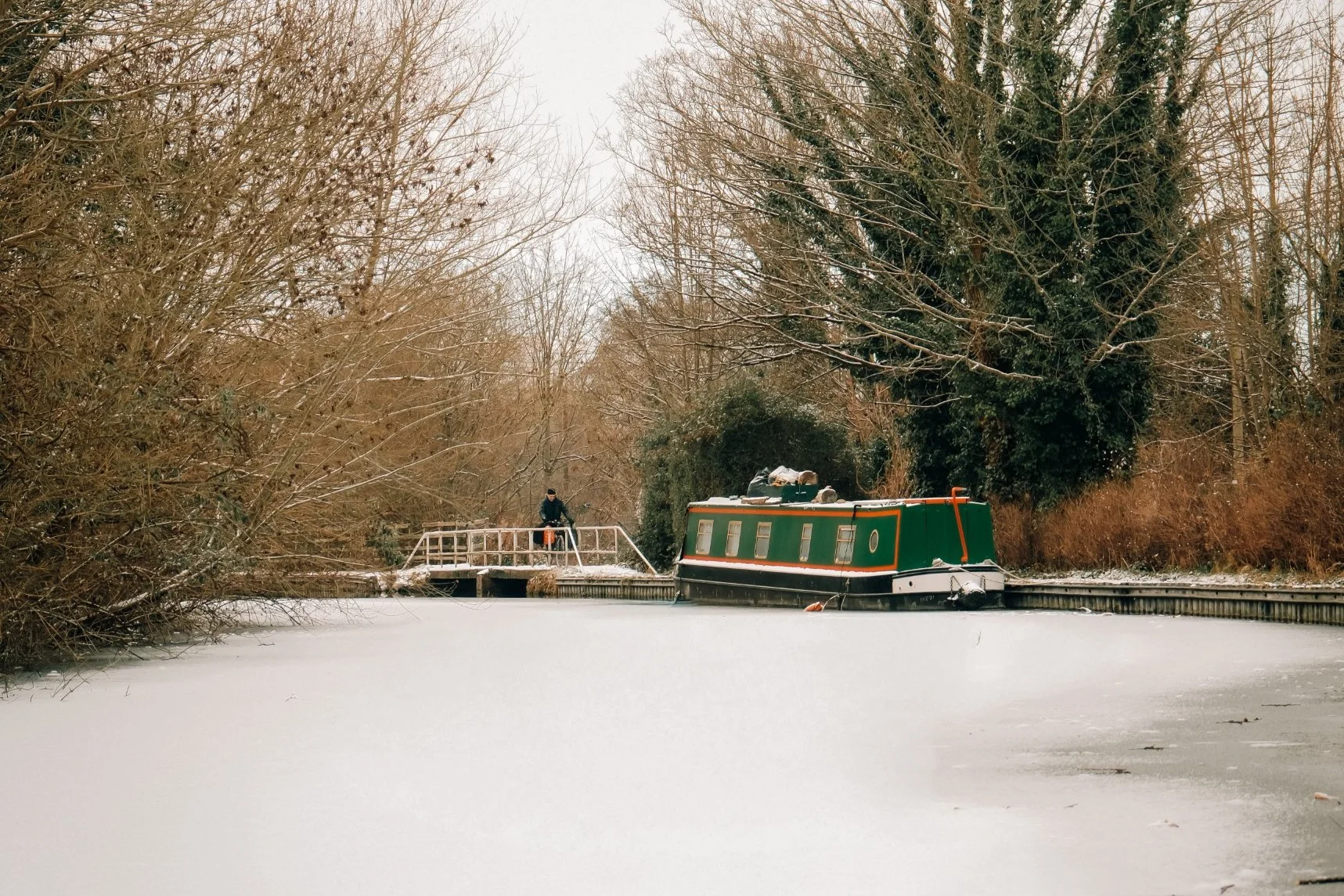
A winter mooring is somewhere to keep your boat for the colder months on a shorter agreement than a year-round berth, usually covering some or all of October to March. In the UK there are four main options: a Canal & River Trust towpath permit, a Scottish Canals winter mooring, a winter berth in an inland or coastal marina, or lifting the boat out and storing it ashore.
This guide compares the options, what each costs and how to book.
Who needs a winter mooring?
Three groups of boaters usually go looking for one:
Continuous cruisers. A continuous cruiser has no permanent berth and must keep moving, usually staying no more than 14 days in one place. Winter stoppages, short days and bad weather make that harder, so many take a winter mooring and stay put.
Owners with an exposed summer mooring. A river mooring, swinging mooring or open pontoon that is fine in July can be a worry in a January gale. A sheltered marina berth for the winter is common on the coast and on rivers. Our guide to protecting your boat in storms and floods explains why.
Owners who want facilities and security. If you do not live aboard and only visit, shore power, a locked gate and staff on site matter more in winter than at any other time of year.
Canal & River Trust winter moorings
The Canal & River Trust (CRT) runs the biggest scheme, on its canals and rivers in England and Wales. CRT winter moorings are fixed stretches of towpath, signed on the bank, available for one to four months between 1 November 2026 and 28 February 2027. On busy visitor moorings roughly half the length is set aside for winter permits, at the end furthest from the facilities. There is no hook-up and no parking, so bring mooring pins and expect to walk to the nearest water point and Elsan.
Continuous cruisers and boaters with a home mooring can both buy one, as long as the boat's licence is in their name and they are meeting its terms. Boaters without a home mooring who are on a six-month restricted licence are generally not eligible.
What it costs
Each site is in one of seven price bands, set by nearby mooring prices, location, local facilities and demand. These are the 2026/27 rates per metre of boat, per month (checked on 17 November 2026): Band 1 £9.40, Band 2 £11.40, Band 3 £14.00, Band 4 £17.30, Band 5 £21.00, Band 6 £24.60, Band 7 £28.70.
Multiply your boat's length in metres by the band rate. A 57ft narrowboat is about 17.4 metres, so it would pay roughly £164 a month in Band 1, £301 in Band 4 (17.4 x £17.30) and £499 in Band 7. Four months in Band 4 comes to about £1,204, or about £1,180 with the 2% discount for paying in full by card before the start date. Widebeams pay the same rate per metre.
How to book
Choose sites from the location and price list, then check the notices and stoppages for your route there and back. Planned stoppages are not grounds for a refund.
Log in at licensing.canalrivertrust.org.uk, or register as an existing customer if you have a licence but no online account.
Pick your sites and months, then pay by card, or by direct debit for three or four-month permits. Keep your index number visible: there is no paper permit.
Sales opened on 1 October 2026, first come, first served, so popular sites may already be full. You cannot double moor or arrive early, and staying after your permit ends can cost £25 a day.
Scottish Canals winter moorings
Scottish Canals runs its own scheme on the Caledonian, Crinan, Forth & Clyde and Union canals. Winter moorings are offered across the network from October to March, for a minimum of three months and a maximum of six. That longer window suits boaters who want the whole winter covered.
There is no online sale day. Scottish Canals asks you to complete a waiting list application form and contact the local moorings team, who can give you prices for your boat and location. You will also need a long-term Scottish Navigation Licence, which covers moorings of three to twelve months.
Marina winter berths
Most inland and coastal marinas sell winter berths, and for owners who do not live aboard they are usually the best fit. Packages commonly run from 1 October to 31 March, with shorter monthly options, and are often discounted against the summer rate.
Inland, a winter berth typically includes an electric hook-up, water, secure gated access and on-site facilities. On the coast, marinas market winter berthing to boats that normally sit on river or swinging moorings, with staff on site and car parking. Each marina sets its own prices, per metre or by boat length, so compare a few.
Before you sign, ask:
Is electricity included, metered or charged as a flat fee?
Can you stay aboard overnight, and how often?
What happens at the end of the term: can you roll onto a year-round berth?
What notice do you need to give, and is any of it refundable?
Our guide to mooring contracts covers the terms to check in more detail.
Lifting out and storing ashore
Taking the boat out of the water removes the risk of ice, flooding and storms altogether, and makes winter jobs such as antifouling or blacking easier. Boatyard winter packages typically bundle the lift out, a pressure wash, storage ashore and relaunch in spring, priced per metre. Dry stack storage does a similar job for smaller boats.
It suits cruisers and yachts you will not use until spring. It is less practical for a 60ft steel narrowboat, which needs a yard with a big enough crane or slipway. Either way, lay the boat up properly: our winterising checklist covers the water system, batteries and engine.
Rivers, the Broads and other authorities
Other navigation authorities do not all run a winter mooring scheme. The Environment Agency, for example, offers year-round base moorings at some River Thames lock sites, with a waiting list when they are full. On Environment Agency rivers, the Broads and in harbours, ask the navigation authority or harbour office what winter arrangements they offer, and look at local marinas.
Which winter mooring suits you?
Cheapest, happy without shore power: a CRT or Scottish Canals winter mooring.
Visiting rather than living aboard: a marina winter berth, for the hook-up and security.
Exposed summer mooring on a river or the coast: a sheltered marina berth, or a lift-out.
Boat not used until spring: storage ashore.
Tired of hunting every autumn: a year-round berth. Compare costs with our UK mooring costs guide and see how to find a long-stay mooring.
Winter moorings: frequently asked questions
When do winter moorings start?
It depends who you book with. CRT winter moorings run from 1 November 2026 to 28 February 2027. Scottish Canals and most marinas cover October to March.
How much does a winter mooring cost?
CRT charges £9.40 to £28.70 per metre per month in 2026/27, depending on the site. Scottish Canals and marinas set their own prices by location and boat size, so ask them for a quote.
Can I get a winter mooring if I already have a home mooring?
Yes. CRT permits are open to boaters with a home mooring as well as continuous cruisers, and marina winter berths are open to anyone.
Do winter moorings have electricity?
Not CRT towpath sites. Marina winter berths usually include a hook-up, but check whether electricity is metered or included.
Want somewhere to keep the boat all year?
MoorHub is bringing UK mooring vacancies, with prices, into one place. Join the waiting list to hear when berths that fit your boat go live.
Sources and further reading
The authorities below are definitive, and fees and rules change each season, so check them before you book.
This article is general information, not legal or financial advice. Where money or occupancy rights are at stake, take your own advice.