

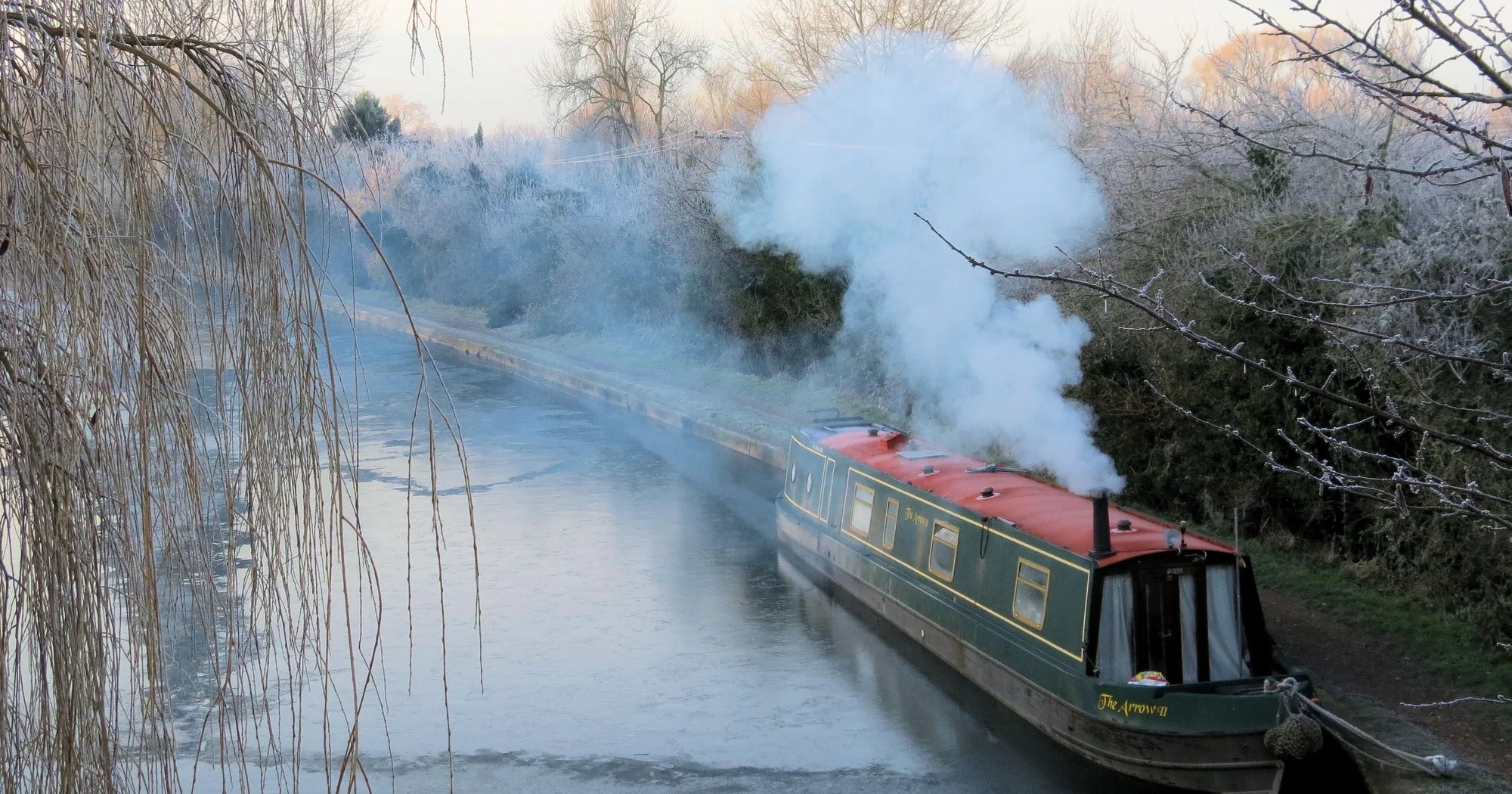
Most winter damage on a boat comes from four things; water freezing inside pipes and pumps, batteries left to go flat in the cold, carbon monoxide from a stove or heater that is working harder than it did all summer, and water levels that rise faster than your ropes allow. Deal with those before the first hard frost, usually some time in November, and the rest of winter is mostly comfort.
Below is what to check and in what order, ending with a checklist you can save. It applies to narrowboats and widebeams on inland waterways.
Start with how the boat will spend the winter
The right checklist depends on what the boat is doing, so decide that first.
Living aboard: the heating is on, so the water system mostly protects itself. Your priorities are carbon monoxide safety, fuel and power.
Cruising through winter: everything above, plus ice, shorter days and the Canal & River Trust's winter maintenance closures.
Left on a mooring: nobody is keeping the cabin warm, so the water system has to be drained or protected, and someone needs to check the boat regularly.
If you are leaving the boat unattended or having it lifted out, check your insurance as well. As our Boat Safety Scheme and insurance guide explains, cover can change when a boat is laid up or out of the water.
The water system: drain it or keep it warm
Water expands as it freezes, and the parts that suffer are the ones holding a small amount of water in a cold spot: the water pump, the calorifier (the hot water cylinder heated by the engine or a boiler), shower mixers, toilet flush lines and any pipe run along the hull side.
On a boat that will be left unheated:
Drain the fresh water tank, or empty it as far as the pump allows.
Drain the calorifier and the pipework, using the drain points shown in your boat's manual.
Open every tap, including the shower, and leave them open so trapped water has room to expand.
Disconnect or drain the water pump and any filter housing, as these crack easily.
Lag pipes that run close to the hull.
If you live aboard, a heated cabin protects most of the system, but the cold spots still freeze: pipes in lockers against the hull, and anything in the engine bay. Know where your stopcock is.
Engine, fuel and batteries
Antifreeze. Test the coolant with an antifreeze tester rather than assuming it is fine because it looks fine. The engine manual gives the strength it needs. If your engine is raw-water cooled (it draws canal water through the engine), that circuit needs draining or protecting too, because it holds water that will freeze.
Diesel. Keep the tank well filled through winter. An emptier tank leaves more air space for condensation, and water in diesel encourages the bacterial growth boaters call diesel bug. The Canal & River Trust also warns that fuel deliveries can be delayed when the cut freezes.
Batteries. Cold reduces how much a battery can deliver, and a flat lead-acid battery can be damaged by freezing. Keep the bank charged, whether from shore power, solar or regular engine runs, and check the terminals are clean and tight.
Stern gland and bilge. Grease the stern gland if yours needs it, and check the bilge pump works and its float switch moves freely.
Heating and carbon monoxide
Winter is when stoves, diesel heaters and boilers work hardest, and it is when carbon monoxide (CO) is most dangerous. CO is the gas produced when any carbon-based fuel burns incompletely, from coal and wood to diesel and gas, and you cannot see or smell it.
Since April 2019 the Boat Safety Scheme (BSS), the safety standard for boats on inland waterways, has required working CO alarms on boats with accommodation spaces, in enough numbers that everyone on board can hear one go off. The scheme also advises private boats with a solid fuel stove to keep a CO alarm in the same space as the stove. Before you light the stove for the season:
Test every CO alarm with its test button, and replace any that are past their expiry date.
Sweep the flue and chimney, and check the stove door and glass seals are intact.
Never block fixed ventilation to keep the cabin warmer. Fuel needs air to burn safely.
Never use the cooker to heat the cabin.
Know the symptoms of CO poisoning: headache, dizziness, nausea and tiredness, often mistaken for flu.
On the mooring: ropes, water levels and visits
Winter rain raises water levels, sometimes quickly, and rivers more than canals. Mooring lines tied tight in summer can leave a boat hanging off its ropes or pulled down at one corner when the level rises. Leave enough slack for the level to change, use fenders where the boat sits against a pontoon or bank, and on a river check the Environment Agency's flood warnings before a wet spell.
If the boat is left, arrange for someone to look at it regularly, especially after storms, heavy rain or a hard freeze. Check the ropes, the bilge and the covers. This is where the type of mooring makes a difference: a marina berth with staff on site, a pontoon and shore power is much easier to leave in winter than an end-of-garden or online mooring you visit by car. Our guide to the types of moorings compares them.
Cruising in winter: ice and stoppages
If you are cruising, ice is the main hazard. The Canal & River Trust advises against cruising in thick ice, and against ever walking on a frozen canal. Breaking through ice is hard on the engine, scrapes the hull protection (the blacking) off a steel boat, and the moving slabs can damage boats nearby. Take extra care on frosty decks and around locks.
Winter is also when the Trust carries out most of its maintenance, closing locks and sections of canal while it replaces gates and repairs structures. For winter 2025/26 the works ran in two blocks, from early November to mid-December and from early January to mid-March, with a break over Christmas. Check the winter stoppages notices for your route before you set off.
If you continuously cruise and want to stay put for the coldest months, the Trust sells temporary winter moorings at selected sites. For 2026/27 they run from 1 November 2026 to 28 February 2027, and permits went on sale on 1 October on a first come, first served basis, so popular sites go early.
Your winter checklist
Save this and work through it in late October or early November, before the first frost:
Decide how the boat will spend the winter: lived aboard, cruising or left.
Check your insurance covers that, including any lay-up or lift-out.
Drain or protect the water tank, pump, calorifier, pipes and taps, and leave taps open.
Test the engine antifreeze, and drain any raw-water cooling circuit.
Fill the diesel tank and order stove fuel early.
Charge the batteries, grease the stern gland and test the bilge pump.
Test every CO alarm, sweep the flue, check the stove seals and keep vents clear.
Loosen mooring lines to allow for rising water, and sign up for flood warnings on rivers.
Arrange regular checks if nobody is living aboard.
If cruising, check winter stoppages on your route and stay off thick ice.
A good time to think about next year's mooring
Winter shows quickly whether a mooring suits you. If you spend it wishing for shore power or staff on site, start looking before spring. Our guide on how to find a long-stay mooring covers what to look for and the questions to ask before you sign.
Find a berth that suits winter
Search moorings by waterway, boat size and facilities such as shore power and water.
Sources and further reading
The organisations below are the definitive source for their own rules, dates and advice, and they update them each season. Check them before you rely on anything here.
This article is general information, not legal or financial advice. Where money, safety or occupancy rights are at stake, take your own advice, and follow your boat's manual or a qualified boat engineer for anything specific to your engine, heating or water system.
Photo: Chris Reynolds, via Wikimedia Commons (CC BY-SA 2.0)