

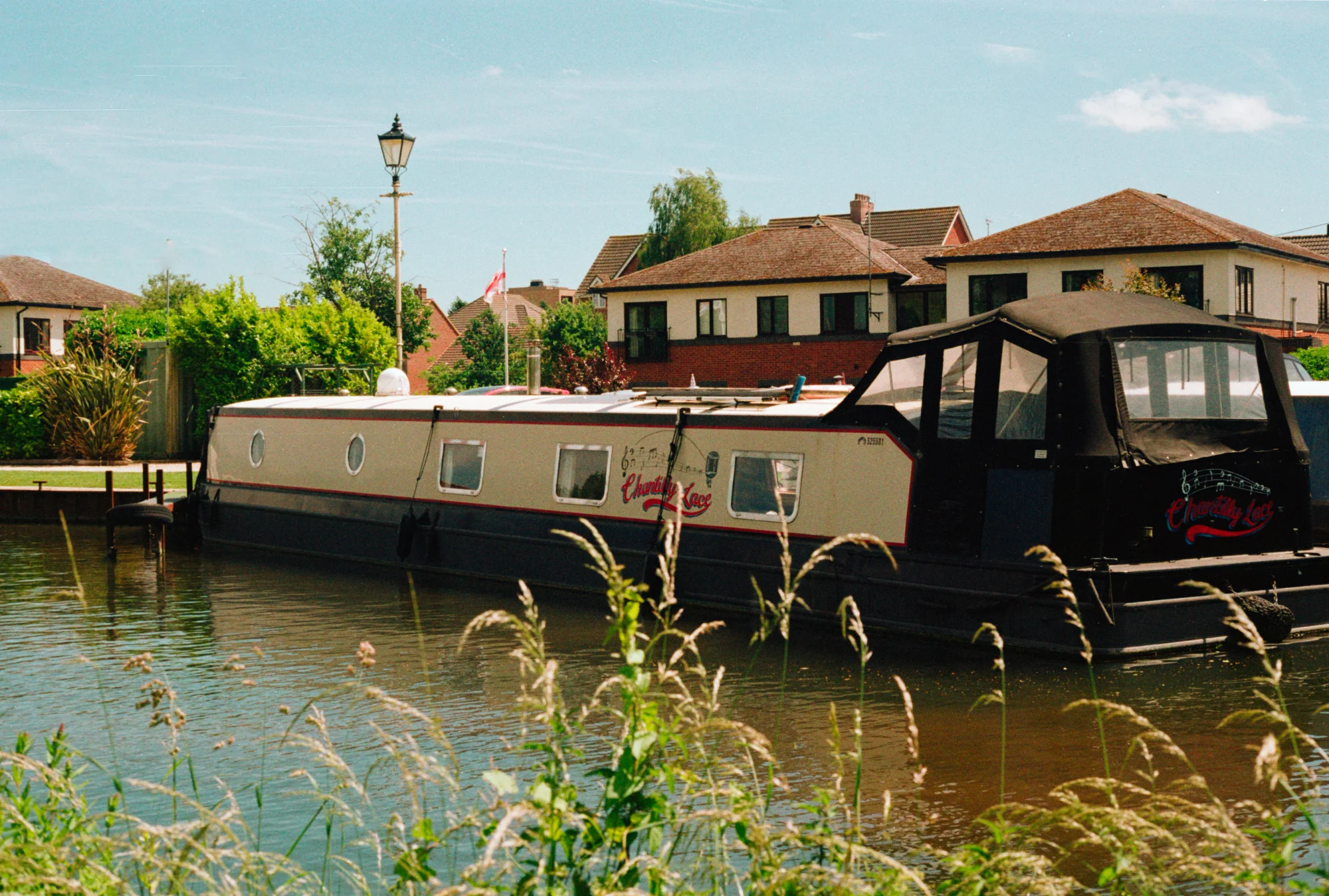
Buying privately saves a broker's commission, but every check falls to you. In short: confirm the seller owns the boat and can sell it free of debt, see it where it is actually kept, have it surveyed out of the water, put the deal in writing, and pay by bank transfer only when you receive a signed bill of sale. The licence and the mooring do not come with the boat, so arrange your own. This guide takes each step in order, for narrowboats, river cruisers and coastal boats alike.
Your rights in a private sale
A private seller must own what they sell and the boat must match its description, but it need not be of satisfactory quality. If the advert claimed a rebuilt engine and there was none, you may have a claim; if the gearbox fails a week later, you probably do not. Keep the advert and every message, and treat your survey as your real protection.
Before you view: spotting a fake advert
A familiar scam copies a genuine listing's photos, prices the boat well below the market and asks for a holding deposit before viewing. The advertiser does not own the boat, and the money vanishes. Warning signs:
A price far below comparable boats.
Pressure to pay a deposit before viewing because other buyers are interested.
A seller who will not meet at the boat, or wants to meet somewhere else.
Cash only, or payment to an account in a different name.
If you are caught out, report it to Report Fraud (formerly Action Fraud) on 0300 123 2040, or Police Scotland on 101.
Checking the seller owns the boat
Most UK boats are on no ownership register at all. Registration is not compulsory, and the Small Ships Register does not prove ownership. Nor does a navigation licence: the Canal & River Trust (CRT) says it records who is responsible for licensing a boat, not who owns it. So build the picture from several documents:
Bills of sale: ideally an unbroken chain of originals from earlier owners to the seller, with any gaps explained.
Build paperwork: the builder's certificate and, for boats placed on the market since June 1998, the Recreational Craft Directive (RCD) declaration of conformity.
Matching names: the seller's name on the licence, insurance schedule, BSS certificate and mooring invoices, checked against photo ID and a proof of address.
Service history: receipts for blacking, engine work and repairs show how long the seller has really had the boat.
Part 1 of the UK Ship Register is the exception. It is a register of title and records marine mortgages, so if the boat is Part 1 registered, request a current transcript of registry from the UK Ship Register, which shows the registered owner and any registered mortgages. A boat built by a private owner for their own use and sold within five years of first use must meet the Recreational Craft Regulations, so ask how that was handled.
Is the boat stolen?
There is no single national check you can run, so physical evidence matters most:
View the boat where it is kept, and ask the marina office or neighbours how long the seller has been there.
Compare the name and CRT index number on the cabin sides with the paperwork. Index numbers stay with a boat when it is sold, so fresh paint over one deserves a question.
On boats built to the RCD, find the craft identification number (CIN) at the top of the transom on the starboard side. A second copy is hidden inside the hull. Check both match the paperwork and show no sign of alteration.
Note the engine and outboard serial numbers and check them against the service records.
Make sure every key is present, including those for padlocks and lockers.
If something does not add up, walk away and call the police on 101. Paying in good faith does not make a stolen boat yours: someone who does not own a thing cannot pass ownership of it, and the rightful owner can reclaim it.
Outstanding finance: what you can and cannot check
Here boats differ sharply from cars. A private buyer who unknowingly buys a car still on hire purchase is protected by Part III of the Hire Purchase Act 1964, but that protection covers motor vehicles only. There is also no HPI-style finance register for boats. What you can do:
For a Part 1 registered boat, check the transcript of registry for registered mortgages.
Ask the seller in writing whether any finance is secured on the boat, and have them confirm clear title in the sale agreement.
Be wary of a seller with no original documents: a lender may be holding them.
If finance is outstanding, pay the lender directly from the purchase price and get written confirmation that the debt is cleared before you complete.
Brokers routinely settle declared finance from the sale proceeds; do the same.
Survey, safety certificate and test run
A Boat Safety Scheme (BSS) certificate checks gas, fuel, electrics and fire risks on the day of the examination. It does not assess the hull or engine, and the scheme itself tells buyers not to rely on one when deciding to buy. Check its expiry date anyway: CRT will not licence a boat without a valid certificate, and one lasts four years. Our guide to the BSS and insurance explains what examiners look at.
For condition, commission your own marine surveyor rather than one the seller suggests. On a steel narrowboat or widebeam, a full pre-purchase survey means lifting the boat out for ultrasonic thickness readings of the hull, where the expensive surprises hide; an in-water survey cannot assess steel below the waterline. Published guides put surveys at about £10 to £25 a foot, so roughly £570 to £1,400 for a 57ft narrowboat, plus a few hundred pounds for the lift-out. Use the findings to renegotiate or walk away. Finally, ask for a test run on the water, and make sure the agreement lets you withdraw if the boat disappoints.
Putting the deal in writing
The Royal Yachting Association (RYA) publishes a sale and purchase agreement and a bill of sale for members to use. A sound agreement covers:
The price, the deposit, and exactly when the deposit is refundable.
That the sale is subject to survey and a satisfactory test run.
An inventory of equipment included, and anything excluded.
The seller's confirmation that they own the boat and it is free of debt.
How any outstanding finance will be cleared, and the completion date.
If you plan to take a coastal boat abroad, the RYA also advises establishing its VAT status before you buy.
Paying safely and completing
Pay the balance by bank transfer on completion, against a signed and dated bill of sale that names you both and identifies the boat. Check the receiving account is in the seller's name. Collect the original paperwork and keys there and then.
Have insurance in place from the moment the boat becomes yours. CRT requires at least £2 million of third-party cover before it will licence a boat, and so does the Broads Authority. Then tell the navigation authority. On CRT waters both buyer and seller must notify the Trust, and the seller stays responsible for the boat until they do. A standard six or twelve month CRT licence does not transfer, so budget for your own. Environment Agency and Broads waters have their own change-of-ownership processes.
The mooring does not come with the boat
A boat advertised with a mooring is a common trap. Most mooring licences are personal to the berth holder and prohibit transfer, and some let the operator end the agreement when the boat is sold, as our mooring contracts guide explains. Speak to the operator yourself before you commit. If the berth is not available to you, line up somewhere to keep the boat before completion: how to find a long-stay mooring covers where to look, and UK mooring costs shows what to budget.
Frequently asked questions
How do I check if a boat has outstanding finance?
There is no central register. Only Part 1 registered boats have a record of registered mortgages; otherwise rely on original paperwork, a written warranty of clear title and paying any lender directly.
Does a boat licence prove who owns the boat?
No. CRT records who is responsible for licensing a boat, not who owns it, and treats ownership disputes as a civil matter.
Do I need a survey if the boat has a BSS certificate?
Yes. The BSS checks safety installations only; a survey covers the hull, engine and fit-out.
Can I keep using the seller's canal licence?
Not a standard CRT licence. Register as the new keeper and buy your own; the seller can claim a refund for unused months.
Need somewhere to keep it?
MoorHub is bringing UK mooring vacancies, with prices, into one place. Join the waiting list to hear when berths that fit your boat go live.
Sources and further reading
The organisations below are the definitive source for their own rules, and fees and requirements change. Check them before you commit.
This article is general information, not legal or financial advice. Where money or ownership is at stake, take your own advice.