
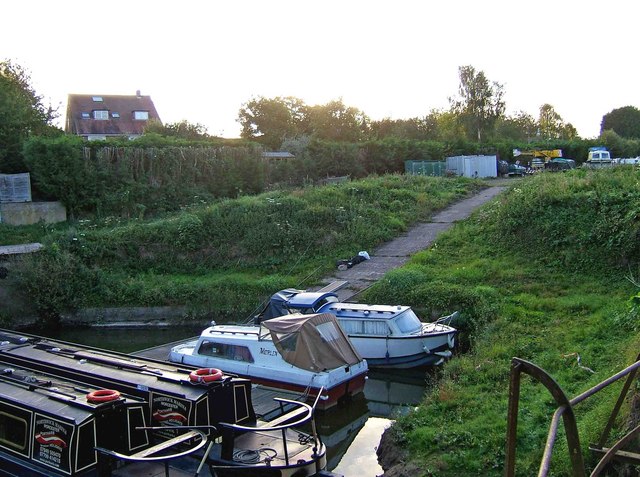
Moorings on the Limehouse Cut
Moorings on the Limehouse Cut — London's oldest canal, linking the Lee Navigation to Limehouse Basin and the Thames.
Type
Canal
Region
Greater London
Flows through
2 places
Length
4 km (2 miles)
Waterway guide
A closer look at the Limehouse Cut
The Limehouse Cut is a 3.7-kilometre canal in east London and the oldest artificial waterway in the capital, opened in 1770 to give barges on the River Lee a direct route to the Thames without the long tidal detour around the Isle of Dogs. It runs dead straight from Bow Locks, where it leaves the Lee Navigation, south-west through Bromley-by-Bow, Poplar and Limehouse to join Limehouse Basin and the Thames lock.
Once lined with mills, timber wharves and chemical works, the Cut is now a regeneration corridor. Modern apartment blocks and converted warehouses face the water, and the towpath — reopened in full in 2003 — carries walkers and cyclists between the Olympic Park and the river. Herons, cormorants and the occasional seal working up from the tideway are regular sights.
For boat owners the Cut matters mainly as a connector: it is the fastest link between the Lee Navigation, the Regent's Canal and the tidal Thames, and it feeds directly into Limehouse Basin, one of the best-equipped long-stay marinas in inner London. Online mooring along the Cut itself is limited and tightly managed by the Canal & River Trust, with strong demand for any residential berth. Bromley-by-Bow, Devons Road and Limehouse DLR put the whole of central London within twenty minutes.
Related reading